
By Jon Quick, CEO, Launchpad Build AI

Football is back. Last week the season kicked off with a Super Bowl rematch followed by the “Battle of California” in Australia – and it all culminates in a Super Bowl a few miles from Launchpad’s HQ.
One of the great things about the start of the season is that everyone is undefeated. Hope springs eternal. Your team can go from worst to first. The guy your team drafted whose name you can’t pronounce can be the next Brady. Your sleeper in Fantasy will win you your league.
Robotics is the same. The latest startup from an OpenAI or SpaceX alumnus can be a $B company overnight. One contract from the right customer is the difference between scraping by and having your choice of term sheets.
As the year progresses we will see what NFL teams and robotics companies really are. As Bill Parcells used to say, “you are what your record says you are.”
The poetry of the game
Here is what I actually want to say, and it is the thing I love about both football and manufacturing.
Watch a running play that works: the running back gets the credit, but it takes everyone for it to be successful. The backside guard has to pull across to open up a gap. The fullback and receivers have to set their blocks. One link in the chain doesn’t do their job and the whole play blows up.
Robotics is the same. When it works, it works because of alchemy.
The systems architect put together a system that managed to balance all of the competing interests in price, performance and reliability into a package that was pitched, sold, developed and deployed. A cell runs, a unit comes off the line, and it looks obvious.
Underneath it: a fixture holding the part rigid so the vision system can trust what it sees. A feeder presenting components in an orientation that allows software and hardware to do their job, and micro adjust for the minute tolerances that occur in the transition from CAD and theory to the real world.
All of it developed by people whose names aren’t on the machine. Take one piece away and, much like football, the whole thing falls apart.
Offense + Defense. Hardware + Software

Teams and coaches get labelled offensive or defensively gifted. The reality is that you rarely win unless you are strong at both.
Robotics works the same way. The defense is the hardware people: grippers, fixtures, tolerances, load paths. They believe the physical world is the hard part, because it is. They are the ones in the trenches whose work you only see when things go wrong. The other side is the offense, the software. It is the part you see, it is flashier and easier to appreciate: perception, planning, models, learned policies.
The scoreboard splits the same way. Offense is the visible part: the cell that picks, places, fastens, moves. Defense is uptime, safety, cycle time consistency and first pass yield. Nobody makes a highlight reel about first pass yield, and it is the only reason anyone signs a second contract.
If you are offense only you can put on one hell of a demo, but when things are two millimetres off from where the model expected them, it all falls apart. A great defense will stop you beating yourself, but it cannot win on its own. It still needs something gamebreaking.
AI is the Audible/Cheat Code
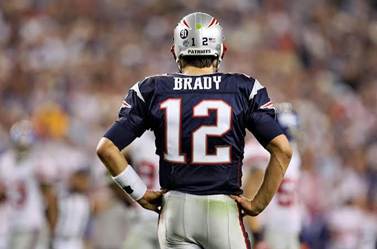
A playbook is a set of work instructions. Eleven people, precise assignments, timed to a fraction of a second, executed the same way every rep. That is a factory line. That is exactly what a factory line is.
But the play as drawn never survives the snap. Tom Brady is the best QB in history not because he could run a 4.0 forty or throw a ball at 100 mph, but because he was the best at reading the defense and tweaking what he did to take advantage. Same call, different answer, because in a world of chaos he knew what was going to happen before it happened.
Conventional automation is a playbook with no audible. It runs the play it was programmed to run, and when the defense shows a look it has never seen, it runs the play into a wall. What we do is generate the instructions from the design, then adapt when reality disagrees. Call the play, read the front, adjust, snap.
Find every edge
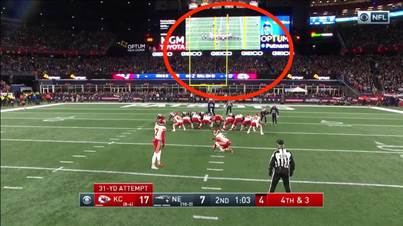
Bill Belichick started every season since 2000 with a left-footed punter, because a left-footed punt spins the other way and returners, who have read right-footed spin their whole careers, hesitate.
Just the other week, Ryan Paganetti, a former NFL analytics staffer, went through more than a decade of broadcasts and claimed that New England’s video board put a reversed camera angle behind visiting kickers, adding a second offset set of uprights and wind streamers pointing the wrong way. He says it never appeared across the Patriots’ own 52 kicks in the same games. New England has not commented.
He tried to do the same in Philly and couldn’t because of the stadium design. The edge did not transfer, because the building was different. Manufacturing is full of these. Part presentation and orientation, feeding, supply chain, interoperability. There are a million little nuances that can provide an edge. Stacked together it makes a massive difference. With AI these are even easier to develop and deploy.
Leadership, and the part you cannot install
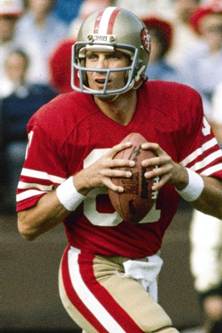
A CEO does not build robots. Brady or Montana or Elway never blocked for themselves.
What they do is make sure that on any given snap, eleven people know their assignment and trust the other ten to know theirs. Sometimes that means telling an excellent engineering team that we are not simulating and solving every failure mode, because the customer needs the system this quarter and a human can reset a tray. Sometimes it means telling your hardware team that I know you can design it better, but use the one you can order online and have arrive here tomorrow.
Culture and attitude are everything. Vince Lombardi is credited with the line, “If you aren’t fired with enthusiasm, you will be fired with enthusiasm.” You need passion. You need people to care. You need people that want to win. To cultivate that you need to make sure that you set high standards, provide the coaching for people to be their best selves, and build a platform that allows them to succeed.
Luck
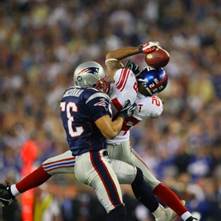
At the end of the day, after all of the preparation, perspiration and late nights, a little luck can go a long way.
The ball bounces your way. A customer’s timeline slips just far enough that you are ready when it lands. The component with the forty week lead time turns out to be sitting on a shelf at a distributor twenty minutes away.
You cannot plan for it and you cannot count on it. What you can do is build a team good enough that when it shows up, you are in position to use it.
Enjoy the season.


